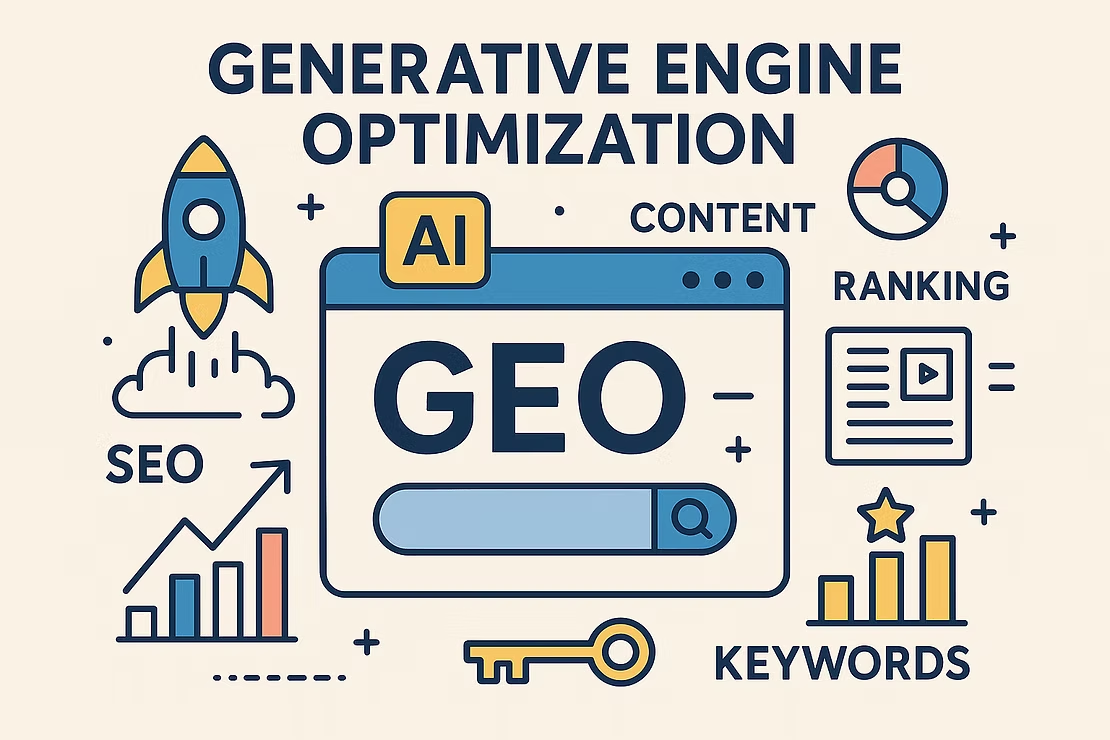
What Is Generative Engine Optimisation?
What is Search Engine Optimisation?
Generative Engine Optimisation (GEO) is the practice of tailoring your digital content so it is easily understood, referenced, and summarised by AI-driven search engines like ChatGPT, Gemini, Bing Chat, Perplexity, and You.com.
Unlike traditional search engines, these platforms generate answers on the fly using large language models (LLMs). Your content isn’t just indexed — it’s interpreted and paraphrased, sometimes without attribution unless properly optimised.
To stay competitive, content creators need to structure, format, and validate their content in a way that helps AI models recognise authority, accuracy, and relevance.
Why Does GEO Matter in 2025?
As more users rely on AI tools to answer questions, summarise research, or find services, generative engines are becoming gatekeepers to online visibility.
Consider these trends in your 2025 SEO Strategy:
- ChatGPT is being integrated into Bing Search and mobile browsers
- Google’s Search Generative Experience (SGE) is rolling out in more countries
- Tools like Perplexity are gaining popularity for summarised research and recommendations
This means a growing percentage of your potential audience may see your brand or content mentioned in an AI response — or not at all, depending on how well your site is optimised.
How Generative Engines Work (In Simple Terms)
Generative engines don’t just crawl content — they:
- Ingest and encode information from websites
- Identify structured, high-quality, factual sources
- Generate conversational responses based on prompts
- Sometimes cite sources, but only when confidence in accuracy is high
For a deeper understanding, see OpenAI’s guide to how ChatGPT retrieves information or Google’s documentation on SGE.
Core Principles of Generative Engine Optimisation
To optimise your content for generative engines, focus on the following strategies:
- Prioritise Authoritative, Fact-Based Content
- AI engines prioritise sources that:
- Are written or reviewed by recognised experts
- Cite credible references
- Demonstrate E-E-A-T (Experience, Expertise, Authoritativeness, Trustworthiness)
- Use Structured, Answer-Friendly Formats
- LLMs are more likely to pull content that is:
- Clearly structured (headings, short paragraphs, bullet points)
- Answer-focused (definition-style paragraphs, FAQs)
- Free from sales fluff or excessive repetition
What is GEO in SEO?
Generative Engine Optimisation (GEO) is a method of structuring content to be recognised and cited by AI-based search platforms like ChatGPT and Gemini.
Generative Engine Optimisation (GEO) is a method of structuring content to be recognised and cited by AI-based search platforms like ChatGPT and Gemini.
- Incorporate Contextual Keywords and Entities
- GEO relies on content being semantically connected. This means including:
- Related terms that support the topic
- Synonyms and variations
- These help AI engines understand not just what you’re saying — but how it relates to broader topics.
- Improve Crawlability and Page Performance
- Even though LLMs don’t rely entirely on crawlers, most still source data from search engines. That means:
- Fast page load times
- Mobile-optimised layouts
- Clean HTML structure
- Indexed, accessible content
- Demonstrate Topical Authority
- Topical authority plays a significant role in whether your content is cited by AI. This involves:
- Publishing consistent, in-depth content across a subject area
- Earning links from reputable sites
- Interlinking relevant articles and service pages
Examples of GEO in Action
Imagine a user asks ChatGPT:
“What’s the difference between SXO and SEO?”
If your article is well-structured, contains definitions, and demonstrates authority on both topics, the model might:
“Best digital marketing agencies for SEO in New Zealand”
If your GEO content is well-optimised, the AI may cite your agency as an authoritative result.
- Reference your explanation
- Use your exact phrasing in the summary
- Link to your site if attribution is built in or recognised
“Best digital marketing agencies for SEO in New Zealand”
If your GEO content is well-optimised, the AI may cite your agency as an authoritative result.
GEO vs Traditional SEO: What's the Difference?
| Area | Traditional SEO | Generative Engine Optimisation |
|---|---|---|
| Focus | Ranking on search engine results pages | Being cited or summarised by AI models |
| Metrics | Organic clicks, impressions, rankings | AI visibility, citations, summarisation inclusion |
| Structure | Keyword-focused | Context-focused and semantically rich |
| Format | Long-form content | Structured, summarised, FAQ-friendly |
Both approaches complement each other — and the best strategy is to align your content with both crawlers and generative engines.
Getting Started with GEO
If you’re new to GEO, here are simple first steps:
- Audit your existing blog content for clarity and factual accuracy
- Create new content in a question-answer format
- Add structured headings and summaries
- Cite external sources and include expert quotes
- Monitor which tools are referencing your content (e.g. via analytics or AI-generated citations)
Final Word: GEO Is About Building AI-Ready Authority
Generative Engine Optimisation is not just a trend — it’s a strategic response to how users consume content in 2025. If your brand isn’t discoverable within AI-generated results, you’re likely missing out on traffic and trust.
At RD Digital, we help clients build AI-ready content that earns citations, trust, and long-term visibility. Explore our full SEO services to see how we can help you prepare for the next era of search.
)