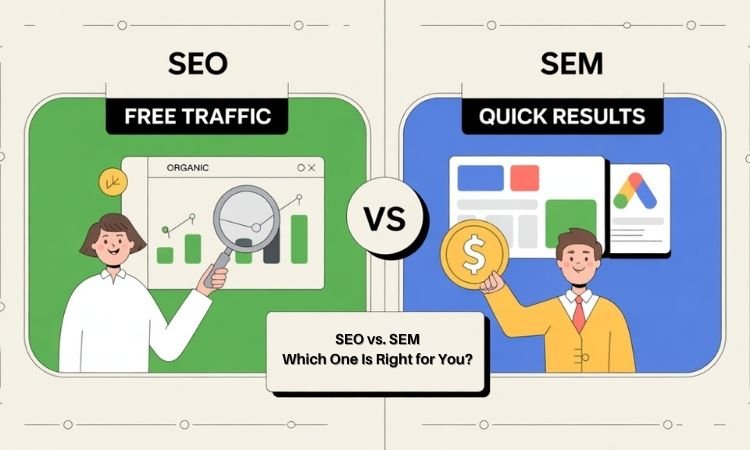
Search engine marketing can be a bit of a maze. If you’re a business owner in New Zealand trying to grow online, chances are you’ve heard of both SEO and SEM. But what’s the actual difference? And more importantly, which one makes the most sense for your business right now?
Let’s break it down — clearly, simply, and from a real-world perspective.
What Is SEO?
Search Engine Optimisation (SEO) is all about improving your website so it ranks higher in organic (unpaid) search results on Google or Bing. When someone types in “best local plumber” or “how to fix a blocked drain,” SEO helps your business show up naturally in those results.
Here’s how SEO works:
- We optimise your website content, metadata, and page structure
- Improve page speed, mobile usability, and technical foundations
- Build credibility through link-building and strategic content
- Target relevant keywords your audience is actively searching
SEO is the long game. It takes time, but it compounds over time — like investing in a strong foundation that keeps delivering.
When SEO Is a Smart Move
- You want to build lasting visibility
- You’re aiming to rank for valuable keywords long-term
- You prefer not to rely on paid ads
- You’re launching a new website and want to grow traffic sustainably
What Is SEM?
Search Engine Marketing (SEM) is a paid strategy, most often using Google Ads, that puts your business at the top of search results — instantly.
With SEM, you bid on keywords (like “emergency electrician Auckland”) and your ad shows up above organic listings. It’s quick, targeted, and flexible.
With SEM, you bid on keywords (like “emergency electrician Auckland”) and your ad shows up above organic listings. It’s quick, targeted, and flexible.
Here’s what SEM allows you to do:
- Run highly targeted campaigns based on keywords, demographics, locations, and timing
- Get immediate visibility and clicks (especially useful for new sites)
- Control budgets and test messaging
- Use retargeting to reach users who’ve already interacted with your site
SEM is more like renting space: you pay for visibility, and when you stop paying, your presence disappears.
When SEM Makes Sense
- You need fast results or have a short campaign window
- You’re launching a new product or promotion
- You want to test offers, landing pages, or market demand
- Your organic rankings aren’t strong (yet)
SEM vs SEO: What’s the Actual Difference?
| Feature | SEO | SEM |
| Traffic Type | Organic (unpaid) | Paid |
| Time to Results | Long-term (3–6 months or more) | Immediate (as soon as campaign launches) |
| Cost | Labour/time investment | Pay-per-click (ongoing ad spend) |
| Sustainability | Long-lasting | Ends when the campaign stops |
| Control | Limited (Google algorithm) | High (you control bids, targeting, timing) |
| Best For | Authority building, long-term visibility | Lead gen, short-term campaigns, fast testing |
Should You Choose One or Use Both?
Here’s the truth: SEM and SEO aren’t enemies — they’re allies.
A strong digital marketing strategy often includes both. You might use SEM to generate leads immediately while building your organic presence with SEO for the long run.
Here’s a common progression we see with clients:
- Start with SEM if your website is new, or you need quick traction.
- Layer in SEO to reduce reliance on ad spend and build sustainable traffic.
This balanced approach allows you to grow both short-term leads and long-term brand presence.
How Do You Decide What’s Right for You?
It comes down to your business goals, budget, and timeline.
If you:
If you:
- Need leads this month → SEM will deliver
- Want a digital strategy that works for years → SEO is your friend
- Want both fast traction and long-term payoff → a combined approach is ideal
At RD Digital, we never push a one-size-fits-all strategy. We partner with NZ businesses to build smart, tailored search marketing campaigns that actually work — no smoke and mirrors.
Whether you’re a tradie, eCommerce store, professional service, or something in-between, we’ll help you choose what fits best and execute it properly.
