
What Is SXO?
Search Experience Optimisation (SXO) is the combination of traditional SEO with user experience (UX) and conversion optimisation (CRO). It goes beyond just getting people to your site — it’s about what happens after they arrive.
SXO ensures that your content doesn’t just rank, but also:
- Matches user intent
- Loads quickly and clearly
- Encourages meaningful action (like making a booking or sending an enquiry)
In 2025, with search behaviour shaped by AI, instant answers, and user impatience, experience is part of optimisation. That’s why SXO is quickly replacing old-school SEO as the preferred strategy for businesses looking to grow online.
Why SEO Alone Is No Longer Enough
- Users expect immediate answers and seamless journeys
- Google now rewards user satisfaction metrics like dwell time and interaction
- AI models summarise or recommend content based on how helpful it is — not just how well it’s optimised
What Makes Up a Strong SXO Strategy?
-
User-Centred Content Design
- Pages are designed around user intent, not just keywords
- Content answers real questions and solves problems
- Language is clear, natural, and scannable
-
Clear Navigation and Page Structure
- Logical layout with headings, summaries, and CTAs
- No clutter or distractions
- Easy for both users and AI to follow
-
Fast, Mobile-Friendly Performance
- Pages load in under three seconds
- Mobile experience is just as good as desktop
- Forms, buttons, and menus are responsive and easy to use
-
Intent-Driven Internal Linking
- Related topics are linked in a way that reflects the user journey
- Helps both users and search engines discover more of your site
- Reinforces topical authority across clusters
-
Conversion-Focused Elements
- Calls to action are placed where users need them
- Trust signals (testimonials, case studies, accreditations) are visible
- Contact forms and service details are easy to find and use
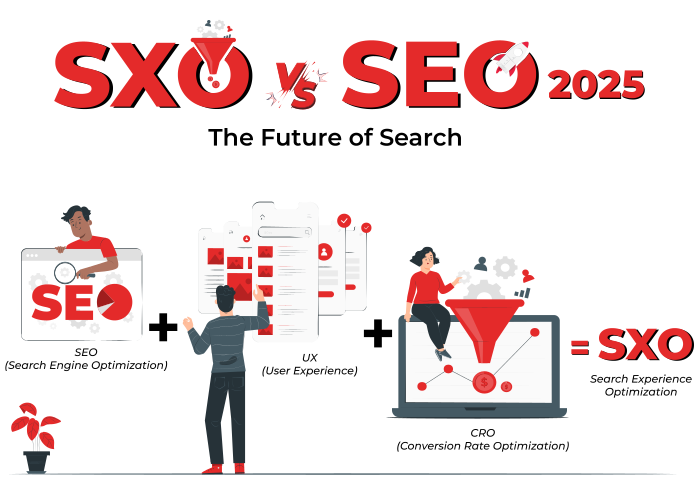
SXO vs SEO: What’s the Difference?
| Feature | SEO | SXO |
|---|---|---|
| Primary Goal | Rank pages on search engines | Convert traffic into meaningful actions |
| Focus | Keywords,backlinks,crawlability | UX, intent matching, conversion flow |
| Key Metrics | Impressions, rankings, traffic | Dwell time, interaction, conversions |
| Example Tactic | Optimising H1 with target keyword | Improving above-the-fold copy to match query intent |
What SXO Looks Like on a Business Website
SEO:
- Target the keyword “digital marketing agency Auckland”, add it to the title, meta description, and headings.
- Write a clear intro that acknowledges what the user is searching for.
- Provide a comparison of service options.
- Add social proof and case studies.
- Make it easy to book a consult or download a service guide.
Getting Started with SXO
- Review your top pages in Google Analytics and ask: Are users finding what they came for?
- Test your mobile experience regularly
- Add FAQs, CTAs, and trust signals to key pages
- Structure long content using internal anchor links
- Improve internal links to guide users to next steps or related services
Final Word: SXO Is SEO That Converts
SEO in 2025 is no longer just about being found — it’s about delivering a satisfying experience. Search Experience Optimisation (SXO) is how modern businesses move beyond rankings and focus on outcomes.
At RD Digital, we help clients design search experiences that attract, engage, and convert. If you’re ready to elevate your SEO strategy with an SXO-first approach, check out our SEO services or get in touch.
